
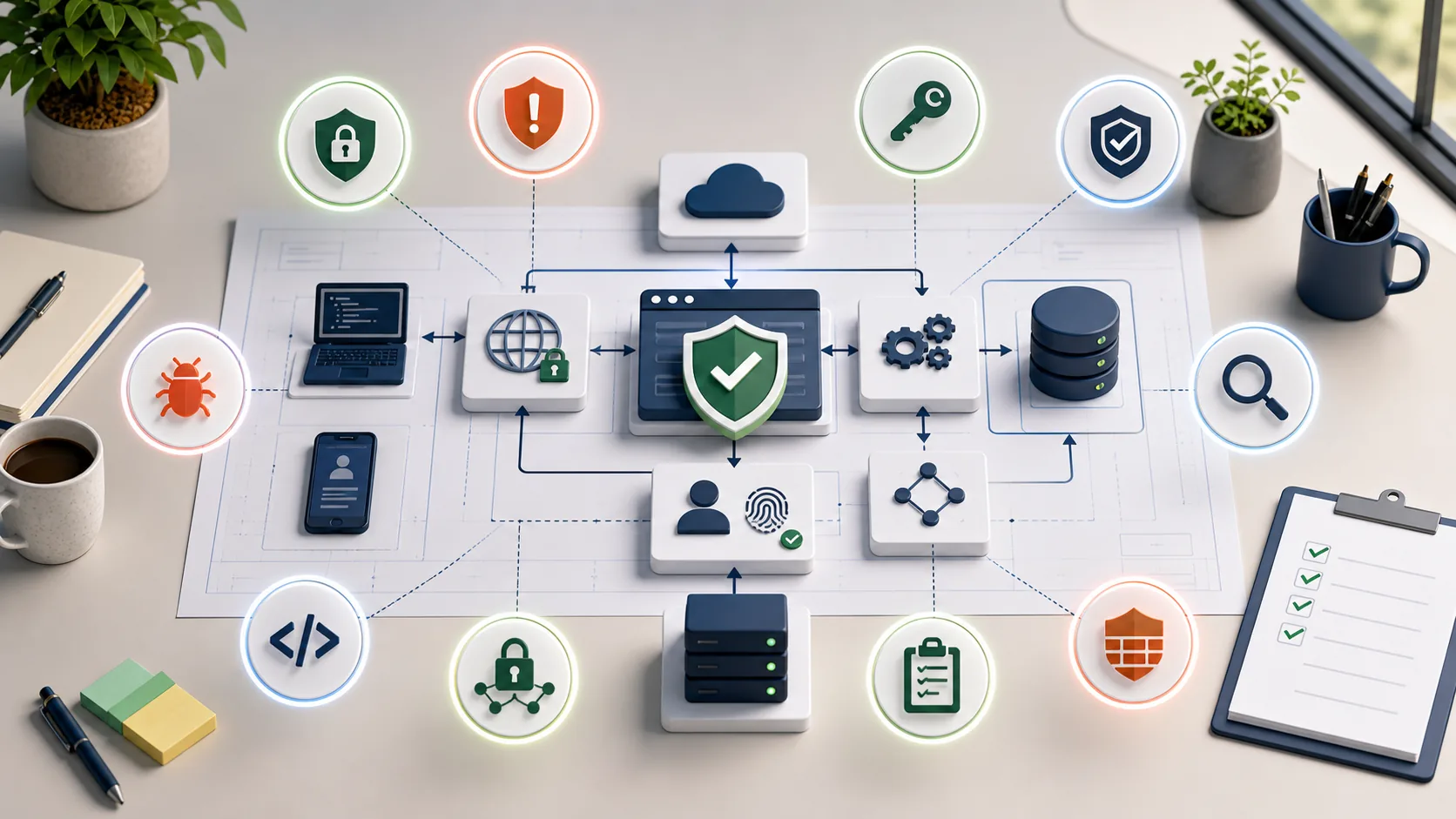
From List To Engineering Practice
The OWASP Top 10 describes common classes of risk: broken access control, injection, insecure design, vulnerable components, authentication failures, software integrity problems, weak logging, and server-side request forgery.
The list becomes valuable when teams translate those categories into specific decisions for their architecture: how authorization is enforced, how data is validated, how secrets are handled, how dependencies are updated, and how incidents are detected.
Developer Habits That Matter
- Authorize every sensitive action on the server, not only in the UI.
- Use parameterized queries, safe serializers, and established validation libraries.
- Keep secrets out of source control, build logs, mobile apps, and firmware images.
- Patch dependencies with ownership, testing, and rollback plans.
- Design logs and alerts for security investigations without exposing sensitive data.
Enterprise Adoption
For larger teams, OWASP guidance should become a shared language between developers, security, QA, DevOps, and product owners. The output should be clear requirements, acceptance criteria, review checklists, and measurable risk reduction.
How Xari Helps
Xari helps teams modernize applications, build secure web and mobile systems, and add practical security into the delivery workflow without turning every release into a manual audit.
Turning OWASP Into Backlog Items
Each OWASP category should map to practical engineering work. Broken access control becomes authorization tests and server-side permission checks. Cryptographic failures become data classification and key management tasks. Injection becomes query and serialization standards.
This translation is what makes OWASP useful for product owners and developers, not only auditors.
Secure Defaults Developers Can Reuse
- Shared authorization middleware and policy helpers.
- Approved data access patterns with parameterization by default.
- Centralized input validation and output encoding guidance.
- Standard authentication flows with session and token handling reviewed once and reused.
- Dependency update policies that include testing and rollback.
- Logging patterns that support investigations without exposing sensitive values.
Review Questions For Each Release
Before release, teams should ask whether new endpoints enforce authorization, whether sensitive data is protected at rest and in transit, whether third-party packages changed, whether logs contain secrets, and whether monitoring can detect abuse of the new feature.
Those questions are simple, but consistently asking them catches many production issues.
How To Keep It From Becoming Theater
Security programs fail when checklists are detached from code. The OWASP Top 10 should feed automated tests, architecture standards, training examples, and retrospectives on real findings. If the same class of issue repeats, the process needs a stronger engineering control.
Adapted and reframed from the Security Factor 365 article: OWASP Top 10 2021 Complete Guide.
