
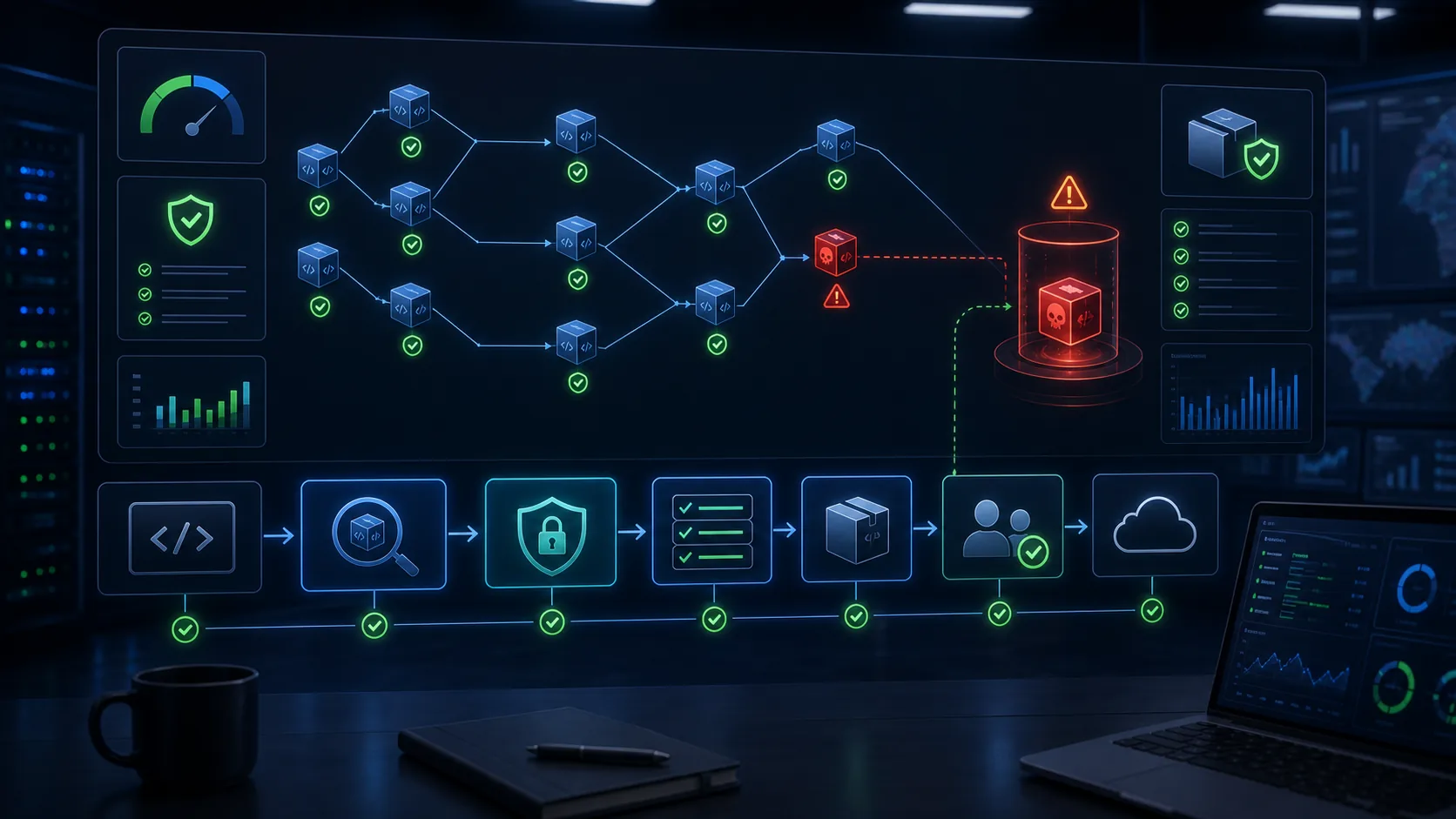
How Malicious Packages Get In
Attackers target package ecosystems because developers trust automation. A small dependency can execute during install, build, test, or runtime. The risk is not limited to web applications; supply-chain issues can affect desktop tools, cloud services, mobile clients, firmware build systems, and internal automation.
Patterns To Watch
- Typosquatting: names that look close to popular packages.
- Dependency confusion: internal package names resolved from public registries.
- Maintainer compromise: trusted packages publishing malicious versions.
- Post-install behavior: scripts that download payloads, inspect environments, or exfiltrate secrets.
- Transitive drift: indirect dependencies changing without direct developer awareness.
Controls That Work In Practice
Effective supply-chain defense needs more than a vulnerability scanner. Teams need lockfiles, private registry strategy, package provenance, SBOMs, dependency review, build isolation, secret protection, and release traceability.
The strongest programs make risky dependency changes visible during review, while still allowing development teams to move quickly when the risk is understood.
How Xari Helps
Xari helps teams design secure delivery pipelines, review software architecture for dependency risk, and implement practical controls across custom software, mobile applications, firmware, and cloud services.
How Supply Chain Compromise Reaches Production
Malicious packages can enter through typosquatting, dependency confusion, compromised maintainer accounts, post-install scripts, vulnerable transitive dependencies, or build tools that execute code during installation. The production incident may start with one small package that nobody reviewed directly.
Modern teams also need to consider container base images, GitHub Actions, build plugins, package mirrors, private feeds, and generated artifacts.
Controls For npm, PyPI, And Internal Feeds
- Pin versions and review lockfile changes as part of code review.
- Use private registries or allowlists for sensitive projects.
- Require multi-factor authentication for package publishing and repository administration.
- Generate and review SBOMs so teams understand what ships.
- Block unexpected install scripts in high-trust environments when possible.
- Monitor dependency age, maintainer changes, license drift, and known vulnerabilities.
What To Do When A Package Is Suspicious
Treat the event like an incident, not a simple upgrade task. Identify where the package was installed, whether post-install scripts executed, which artifacts were built, and whether secrets may have been available in the build environment.
Then rebuild from a clean dependency set, rotate exposed credentials, and preserve enough evidence to understand the path of compromise.
Making Secure Dependencies Routine
Supply chain security works when it becomes part of delivery hygiene: automated dependency updates, ownership for aging packages, risk-based approval for new libraries, and CI gates that understand context instead of blocking every minor issue.
Adapted and reframed from the Security Factor 365 article: Software Supply Chain Attacks.
Related Services
Security | Custom Software Development | Engineering Augmentation Services
